Complaints Procedures: Reading the Fine Print
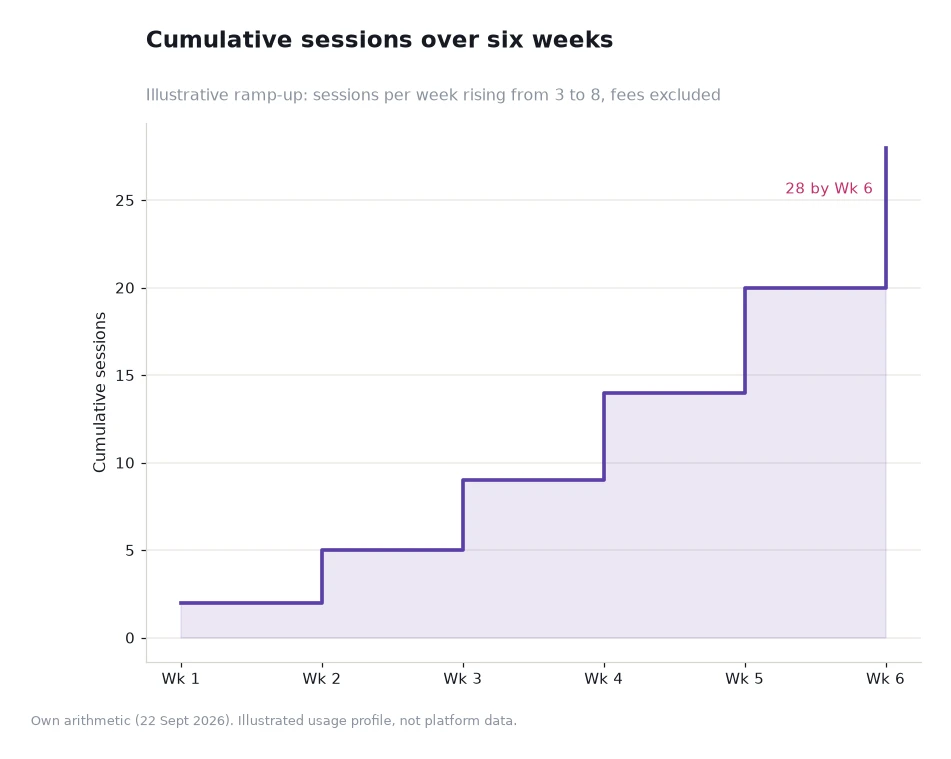
A complaints procedure is fine print until the day you need it, and the day you need it is the day you will not want to read it. Crushon splits its routes cleanly: reports go to the content page, takedown requests follow the removal policy, and a complaints policy covers how a concern is handled. The reason to learn the difference in advance is arithmetic rather than principle — a six-week engagement that produces 28 sessions by the end also produces 28 points at which something could have gone wrong.

Key takeaways
- Match the concern to the route: a listing goes to the report control, a takedown to the removal policy, a process concern to the complaints policy.
- Write complaints in dated order. A timeline of 28 sessions is easier to act on than a paragraph of frustration.
- State the outcome you want: a review, a removal, or an explanation. Vague requests take longer than specific ones.
- Keep one file with the dates, the routes used and the replies received. That file is what turns a complaint into a follow-up.
What a complaints procedure is actually for
Most people confuse a complaint with a report. A report is about a piece of content: this listing breaks the guidelines, here is the page. A complaint is about a process: you reported something and disagreed with the outcome, or a decision affected you and you want it reviewed by somebody other than a first-line queue.
That distinction decides which route to use, and using the wrong one is why people feel passed around. Sending a process concern through the content report control means a person equipped to assess a listing is now assessing a workflow question. Sending a content problem to a complaints channel produces the reverse mismatch.
The fine print matters for a second reason: each route implies a different expected reply. A report should produce an action on a listing. A takedown request should produce a status. A complaint should produce a route to a reviewer. Knowing which reply you are entitled to expect is what stops a silent week from feeling like an outcome.
Reading the procedure in order
Work through the four stages below and decide in advance which one fits the problem you might have. The fourth stage is the one people forget exists: the point at which the answer is not a change but an explanation of why no change is coming.
| Stage | What it covers | What to send | What a reply should contain |
|---|---|---|---|
| Report a listing | A character or page that breaks the guidelines | The report control on the page itself | Acknowledgement, then action on the listing |
| Request removal | Material you want taken down | The page, the date and the reason | Confirmation of receipt and status |
| Raise a complaint | How a report or decision was handled | A dated summary and the outcome you want | A route to a reviewer who can reconsider |
| Request an explanation | A decision you want understood rather than changed | The decision, its date and your specific question | A stated reason, which is itself a resolution |
The fourth stage is worth its own line because it produces the calmest correspondence. Plenty of process complaints are really requests for an explanation, and asking for one directly is faster than escalating a disagreement you have not yet articulated.
Worked example: a dated log, from 2 sessions to 28
Take an engagement profile and turn it into a record. The cumulative session line runs 2, then 5, then 9, then 14, then 20, then 28 across six weeks, which means the increments are 2, 3, 4, 5, 6 and 8 sessions. Each increment is a set of moments with dates attached, and dates are the raw material of a complaint.
Now imagine something went wrong in week five. With no log, the complaint reads as a description of a feeling: it happened recently, it was annoying, please review. With a log, the same event has a context: on this date I had this exchange, on that date I used this route, and here is what came back. Add the two cumulative figures from the chart — 14 sessions by the end of week four and 20 by the end of week five — and the reviewer can see exactly where the problem sits in an otherwise routine pattern.
The arithmetic here is the author's illustrative profile and not platform measurement, and fees are excluded entirely. The technique is the point: a complaint that reads as a timeline is easier to act on than one that reads as a mood, and the log costs you one line per session.
Where the fine print actually lives
Three pages carry the detail, and all three are worth ten minutes. The complaints policy sets out the process for a concern, and it is the right route when a report has not produced the outcome you expected. The content removal policy covers takedown requests and explains where they should go. The compliance statement provides the context for any question about what the platform's content is, including that it is AI-generated text rather than material depicting real people.
Readers who arrive from a search for ai porn chat usually find these pages only after something has gone wrong, which is the worst moment to read them. Reading them beforehand takes the panic out of the process and leaves you with a route, a format and a reasonable expectation of what comes back. The complaints policy is the one to open first if you have a process concern rather than a listing problem.
One habit ties it together: a single note file with dated lines. Every report, every reply, every route used, one line each. It takes seconds, and it is the difference between a complaint that gets reviewed and a complaint that has to be reconstructed.
Frequently asked questions
How do I know if I have a complaint or a report?
Ask what you want changed. If it is a listing, you have a report, and the report control on the page is the route. If it is a decision or a process, you have a complaint, and the complaints policy describes the path.
What should the first line of a complaint say?
The outcome you want. One sentence naming a review, a removal or an explanation gives the reader a destination, and everything after it can be a dated account of what happened.
How much detail is too much?
Detail helps when it is dated and specific and hurts when it is repetitive. Five dated entries describing what happened will outperform five paragraphs of frustration every time.
Is it worth complaining at all?
For a listing, yes, since reports drive action. For a process concern, the value depends on what you want: a review needs a complaint, while an explanation can often be requested in one short message.
Read it once, then forget it until you need it
Spend ten minutes on the three policy pages, save them to a bookmark folder, and start a one-line log for anything that might later need a timeline.
That is the entire preparation. The point of fine print is not to study it, it is to know where it is on the day it matters.
Data and sources: the complaints policy, the content removal policy and the compliance statement published by Crushon.AI, plus its Porn Chat AI pages, read 22 Sept 2026[1]. Session figures are illustrative arithmetic by the author and exclude fees. Readers should be 18 or older.